
The NUS Biorobotics Lab, under the direction of Professor Yu Haoyong, is at the forefront of developing innovative robotic systems, devices, and enabling technologies to tackle healthcare and manpower challenges prevalent in societies with rapidly aging populations. Our multidisciplinary team, specializing in biomechanics, neuroscience, and robotics, uses a biorobotics approach, drawing insights and inspiration from nature to pioneer novel technologies in actuation, sensing, and control. We are focused on advancing the next generation of Rehabilitation Robotics, Assistive and Service Robotics, Human-Robot Interaction and Bio-inspired Robotics.
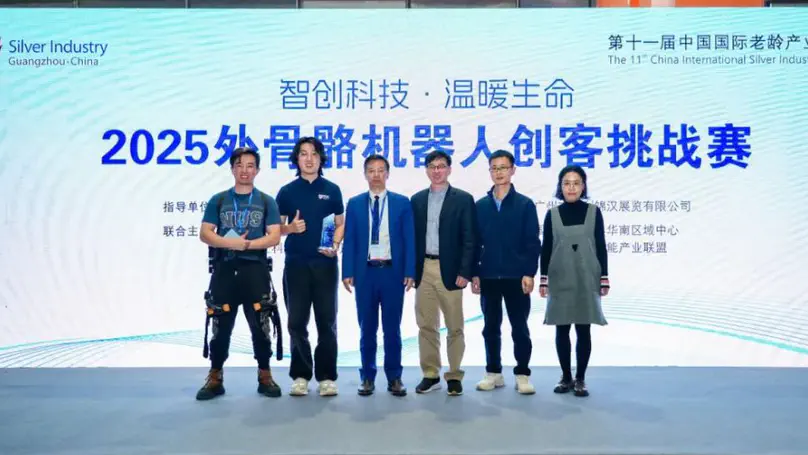
On November 28, the 2025 exoskeleton robot maker challenge finals were successfully held in Guangzhou. We won the first prize with our hip exoskeleton. Organizers said the competition showcased advances across eldercare, rehabilitation, and sports applications, will keep expanding as an innovation incubator, and aims to accelerate real-world adoption of exoskeleton technology to support disability services and healthcare. Credit: www.silverindustry.cn
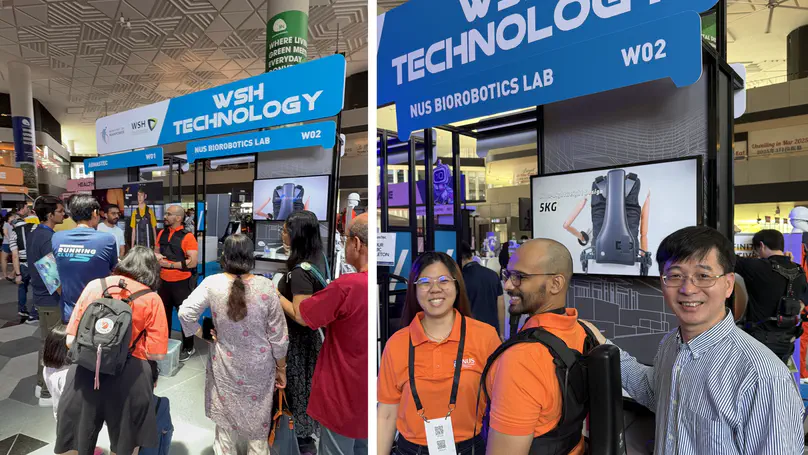
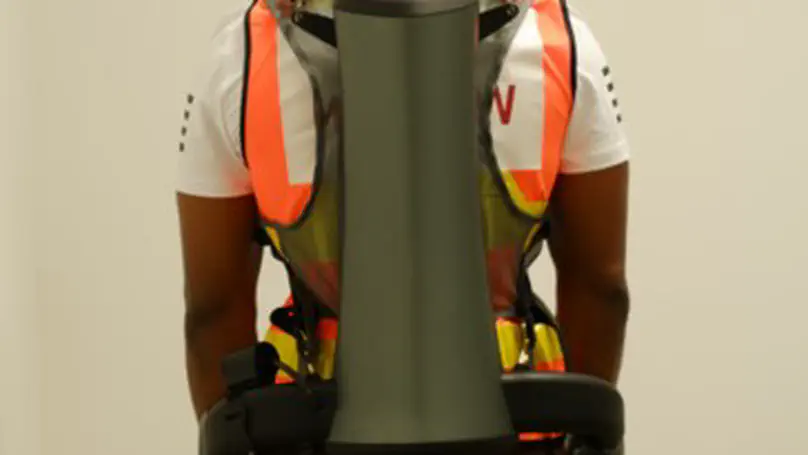
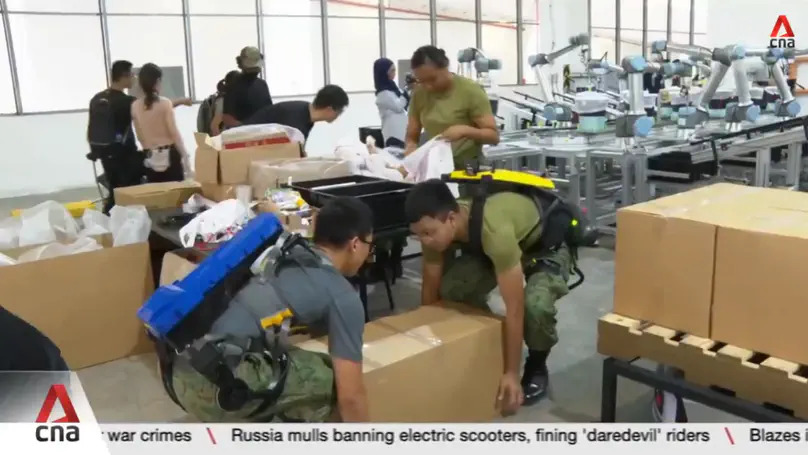
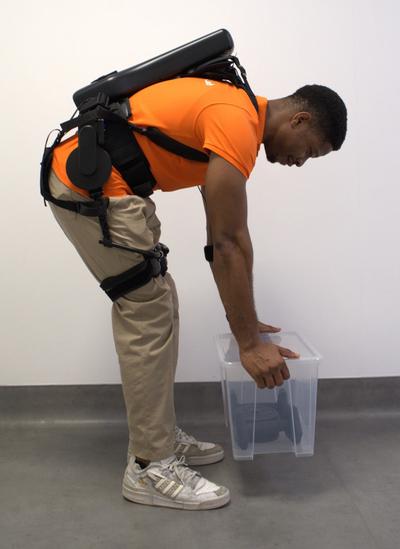
We developed a novel active back support exoskeleton to reduce muscle fatigue and prevent injury on the lower back during lifting tasks. The team’s work was published in IEEE Transactions on Robotics on 9 November 2023. This innovation aligns with the broader goal of creating human-centric robotic systems that enhance safety and efficiency in the workplace. Our work made waves behind the scenes of the 2024 National Day Parade (NDP) packing operations. By integrating such assistive technologies, the risk of work-related musculoskeletal disorders could be reduced while boosting both productivity and wellbeing in the workforce.

The prototype exoskeletons were developed by NUS Biorobotics Lab at the Department of Biomedical Engineering. These suits assist with heavy lifting and repetitive tasks. Solidiers used them for packing 300,000 National Day Parade packs. The exoskeletons have been trialed with baggage handlers at Changi Airport and chemical plant workers. ‘With more societies facing the challenging of an ageing population, we need to start protecting our workers against injury whilst they are young,’ says Assoc Prof Yu Haoyong. Credit: NUS College of Design and Engineering